Artist-in-Residence
Understood as much more than programming, the arts serve as a means by which communities of color assert a recuperative sense of identity. Therefore, the Initiative integrates the arts into all three foci.
In terms of research, the Initiative will promote the arts as a form of scholarship, a means of knowing and interpreting the past and the contemporary moment, as well as a means of envisioning alternative futures.
In terms of education, the arts will offer students, faculty, and staff the opportunity to learn more about BIPOC communities.
Relative to community empowerment, the arts will be a central vehicle through which Notre Dame moves beyond its campus to support and celebrate communities of color in the greater Michiana area and beyond.
The residency
The artist-in-residence program serves as the engine for the Initiative's efforts in the arts. Each year, the Initiative hosts an artist (writer, visual artist, dancer, musician, filmmaker, etc.) whose work is rooted in a community of color. They will present their artistic productions, visit classes focused on their work, and present their work in venues beyond the Notre Dame campus, either in the greater Michiana community, or virtually in partnering communities across the globe, or both.
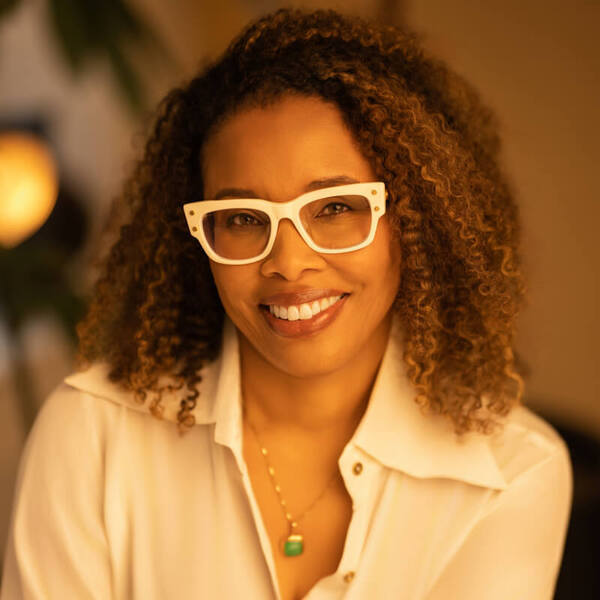
2026-2027 Lauren Francis-Sharma
Lauren Francis-Sharma, (pictured above) a Pushcart nominated writer, is the author of three novels. Her critically acclaimed debut novel, 'Til the Well Runs Dry, was chosen as an “O, The Oprah Magazine” 2014 Summer Reading Pick and was awarded the Honor Fiction Prize by the Black Caucus of the American Library Association. Her second novel, Book of the Little Axe, was selected as the 2020 American Library Association’s “Libraries Transform Book Pick,” and was a finalist for the Hurston/Wright Award in Fiction. Her third novel, Casualties of Truth, a Dublin Award nominee and finalist for the 2025 Caricon Prize, has been named a 2025 “Book to Read” by NPR, and was inspired by her time at South Africa’s Truth and Reconciliation Commission’s Amnesty Hearings. Lauren has written the new introduction to the latest edition of the classic South African novel, Cry, the Beloved Country and is also the co-editor of the 2026 anthology, Welcome to the Mountain: A Portable Bread Loaf Writer’s Conference, which is a result of her current position as the Assistant Director of Bread Loaf Writers’ Conference at Middlebury College. Lauren, a MacDowell Fellow, serves as the Awards Chair for the PEN/Faulkner Foundation Board. She is a graduate of the University of Pennsylvania, the University of Michigan Law School, and The MFA Program for Writers at Warren Wilson College. Her fourth novel will be published by Henry Holt in July 2027. Lauren is the mother of two young women who are off at college, and she lives in Maryland with her husband and their dog.
Spring 2026 DeJeonge Reese

DeJeonge Reese (she/her) is a multidisciplinary visual artist and educator from Yeadon, Pennsylvania, whose work uses material exploration as a form of storytelling rooted in Black history, ancestry, and identity. Working across mixed media, textile and fiber art, sculpture, installation, and performance, Reese builds visual narratives that honor inherited knowledge, lived experience, and the labor of those who came before her. She holds degrees from The Lincoln University of Pennsylvania and Moore College of Art and Design.
Reese’s practice is grounded in historical and ancestral research, alongside personal experience. Drawing from archival materials, oral histories, and family research, her work often bridges past and present, translating inherited memory and cultural knowledge into contemporary forms. Rather than illustrating history directly, Reese approaches research as an active, embodied process—using material exploration to connect personal narratives with collective Black histories.
Black hair is a central material in her work, but it exists within a broader material language. Reese treats hair as fiber, archive, and connector, weaving it alongside burlap, fabric, found objects, and handmade structures to tell layered stories of migration, labor, care, survival, and identity. Each material carries symbolic weight: burlap references ancestral labor, hair gestures toward DNA and roots, and repetitive handwork mirrors rituals passed down through generations.
Storytelling sits at the core of Reese’s artistic process. Her works function as visual testimonies, blending individual narrative with shared Black histories to challenge dominant representations and reclaim authorship over Black identity. By merging traditional craft practices with contemporary material experimentation, she creates spaces where memory and cultural inheritance are held with intention.
Reese’s work has been exhibited throughout Philadelphia, New York, and beyond, including at Philadelphia International Airport, Rush Arts Philadelphia, The Art Trust, and One Mile Gallery. She is a 2023 recipient of the Mural Arts Philadelphia Black Artist Fellowship and has participated in several artist residencies. Reese is the current Fibers/Textile Coordinator for the Spring Pentaculum at Arrowmont School of Arts and Crafts.
An educator since 2016, Reese teaches in the Visual Arts Department at Lincoln University of Pennsylvania, encouraging and inspiring students to appreciate art on a deeper and more personal level. Across her studio work and teaching, DeJeonge Reese uses material exploration as an act of remembrance—honoring ancestry, preserving memory, and asserting Black presence across time.
2025- 2025 Brendan Fernandes
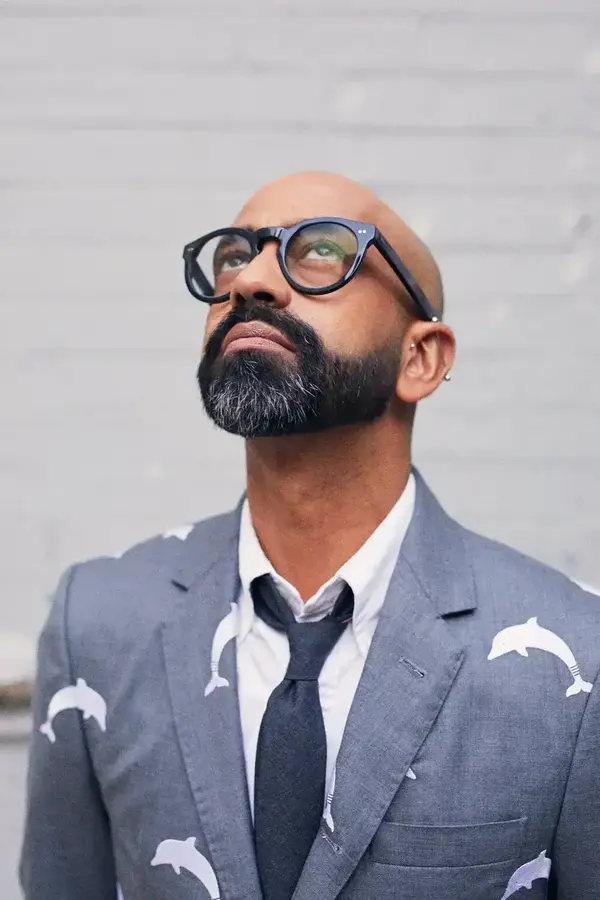
Brendan Fernandes is an internationally recognized Canadian artist working at the intersection of dance and visual arts. Currently based in Chicago, his practice addresses issues of race, queer culture, migration, protest, and other forms of collective movement. Constantly seeking to create new spaces and forms of agency, Fernandes’ work often takes on hybrid forms: part ballet, part queer dance party, part political protest always rooted in collaboration and fostering solidarity. Fernandes is a graduate of the Whitney Independent Study Program (2007) and has been the recipient of numerous awards, including a Robert Rauschenberg Residency Fellowship (2014), a Smithsonian Artist Research Fellowship (2020), an Artadia Award (2019), a Louis Comfort Tiffany Foundation Grant (2019), and most recently, the Platform Award (2024). In 2024, he was also honored with the Creative Voice Award by Arts Alliance Illinois. His work has been presented at prestigious venues such as the 2019 Whitney Biennial at the Whitney Museum of American Art (New York), the Museum of Contemporary Art Chicago (Chicago), the Solomon R. Guggenheim Museum (New York), the Museum of Modern Art (New York), the J. Paul Getty Museum (Los Angeles), the National Gallery of Canada (Ottawa), and the Musée d’art contemporain de Montréal (MAC), among many others. Fernandes is an Associate Professor in the Department of Art, Theory, and Practice at Northwestern University. He is represented by Monique Meloche Gallery in Chicago and Susan Inglett Gallery in New York. Recent and upcoming projects include performances and solo presentations at the Pulitzer Arts Foundation (St. Louis, MO), the Museum of Contemporary Art Denver (Denver, CO), the Fabric Workshop and Museum (Philadelphia, PA), and Prospect.6 (New Orleans, LA). In spring 2026, a major new commission and solo exhibition will debut at the Art Denver (Denver, CO), the Fabric Workshop and Museum (Philadelphia, PA), and Prospect.6
2023-24 David Martin

David Martin is a citizen of the Pokagon Band of Potawatomi Indians and used his upbringing in a traditional native family to influence his art. Proudly self-trained, his artistic mediums include oil painting, beadwork, and tattoo art. He is an independent local artist with current appointments serving as a member of the Indigenous Consultation Committee at Notre Dame’s Raclin Murphy Museum of Art and as the 2023-24 Artist-in-Residence at Notre Dame’s Initiative on Race and Resilience.
Martin’s first venture into a career in art started in the late 1980s doing beadwork and dance regalia for other Native American dancers. When working on traditional cultural items for dance, Martin focuses on acknowledging motifs and designs of the past while putting a modern twist on regalia in either materials or artistic execution. His work is regularly displayed throughout the country
David Martin won many national awards including some from one of the nation's largest and most prestigious tattoo conventions, after learning the craft in 1996. His awards have included: Most Realistic Tattoo (2006), Best Full Back Tattoo (2007, 2008, 2015), and Best Full Arm Sleeve (2008). Beyond his commissioned pieces, Martin and his work at Bicycle Tattoo was featured in a short documentary by the Grotto Network in 2017 in response to his pledge to cover up any racist tattoos for free to individuals following the events in Charlottesville, VA.
Martin began his current artistic focus – oil painting – in 2007. His commissioned work can be found across Michigan and Indiana, including at the South Bend, IN, New Buffalo, MI, Dowagiac, MI and Hartford, MI locations of the Four Winds Casinos. He recently completed a commission for the Institute for Social Concerns’s Arts of Dignity series at the University of Notre Dame. His 2023 submissions alone have won various awards including: ‘Honorable Mention’ for the oil painting “Michigan Snake Dance” at the Heard Museum in Phoenix, AZ and three awards at the Eiteljorg Museum of Western Art in Indianapolis, IN including ‘Third Place’ for “Red Deer, Michigan Wetland” and ‘First Place’ and ‘Best of Show’ for the oil painting “Portrait of Clarence White.” Currently, Martin serves as an advisor on both of the boards of the South Bend Art Museum and Raclin Murphy Musuem of Art.
His Potawatomi name, Mamanjigosid Minosino, translates to “Lame Warrior” and was given to him as a teenager while recovering from being hit by a car on his bicycle. Martin’s distinctive style is influenced by the traditional aesthetics of the indigenous people of the Great Lakes as well as his personal love of science fiction and fantasy storytelling. In addition to his art, David is a husband, father, pow-wow singer, dancer, entrepreneur, and paintball enthusiast.
2022–23 Natasha Trethewey
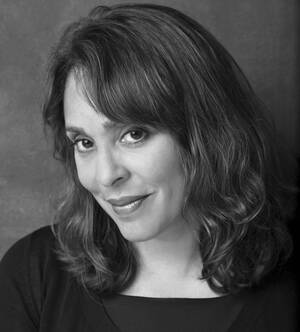
Pulitzer Prize-winner Natasha Trethewey served two terms as the 19th Poet Laureate of the United States (2012–14), while also serving as the Poet Laureate of the State of Mississippi (2012–16). She is the author of the New York Times bestseller Memorial Drive: A Daughter’s Memoir; a book of nonfiction, Beyond Katrina: A Meditation on the Mississippi Gulf Coast; and five collections of poetry: Monument: Poems New & Selected, which was longlisted for the 2018 National Book Award; Thrall; Native Guard, for which she was awarded the Pulitzer Prize; Bellocq’s Ophelia; and Domestic Work, which was selected by Rita Dove as the winner of the inaugural Cave Canem Poetry Prize for the best first book by an African American poet. She is the recipient of fellowships from the Academy of American Poets, the National Endowment for the Arts, the Guggenheim Foundation, the Rockefeller Foundation, the Beinecke Library at Yale, and the Bunting Fellowship Program of the Radcliffe Institute for Advanced Study at Harvard. From 2015-2016, she served as poetry editor of the New York Times Magazine. In 2017 she received the Heinz Award for Arts and Humanities, and in 2020, she received the Rebekah Johnson Bobbitt National Prize for Lifetime Achievement in Poetry from the Library of Congress. A member of both the American Academy of Arts and Letters and the American Academy of Arts and Sciences, she was elected to the Board of Chancellors of the Academy of American Poets in 2019.
2021–22 Reginald Dwayne Betts
Betts is the author of three acclaimed collections of poetry — Felon, Bastards of the Reagan Era, and Shahid Reads His Own Palm — and a memoir, A Question of Freedom: A Memoir of Learning, Survival, and Coming of Age in Prison. He was awarded a 2021 MacArthur “Genius” Fellowship and is the recipient of numerous other awards and honors, including an American Book Award, PEN/New England Poetry Prize, a Guggenheim Fellowship, Radcliffe Fellowship, and a 2019 National Magazine Award for “Getting Out,” his New York Times Magazine article about his journey from prison to becoming a licensed attorney. He holds a B.A. from the University of Maryland; an M.F.A. from Warren Wilson College, where he was a Holden Fellow; and, a J.D. from Yale Law School. He is a Ph.D. in Law candidate at Yale and he spent a year representing clients in the New Haven Public Defender’s Office as a Liman Fellow.